Close Holes
Fills a mesh's open boundaries with caps, up to a chosen hole size.
The Close Holes node finds open boundary loops in a mesh and caps them, so an open shape becomes a closed solid.
- One control, Max Hole Size, plus a Result readout that says what it found
- Found in the node graph under Surfaces → Topology
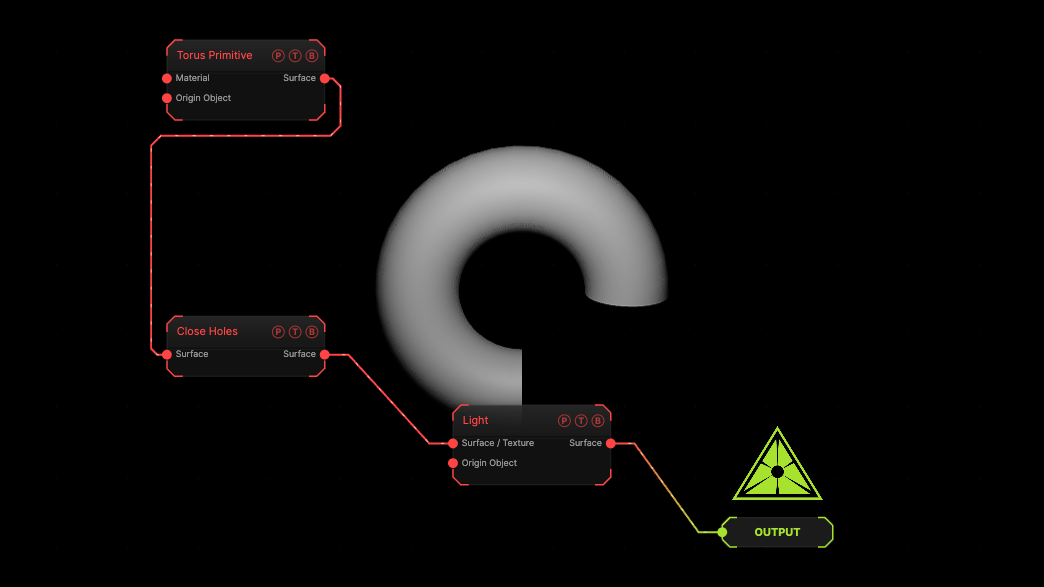
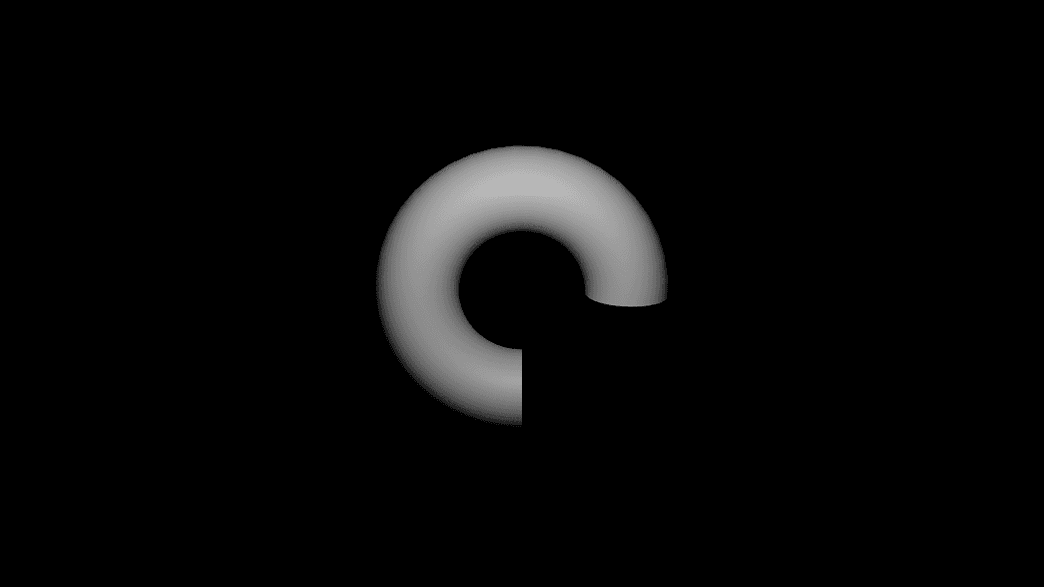
The image on the right is the example patch itself. Drag and drop it onto the app, or load it with File → Load, to open the full graph. A torus with a 270° Arc has its two open ends capped.
Inputs and outputs
| Port | Type | Purpose |
|---|---|---|
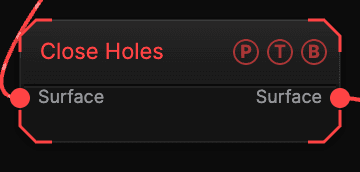
| Surface | Surface | The mesh with holes. |
| Surface | Surface | The capped mesh. |
Parameters
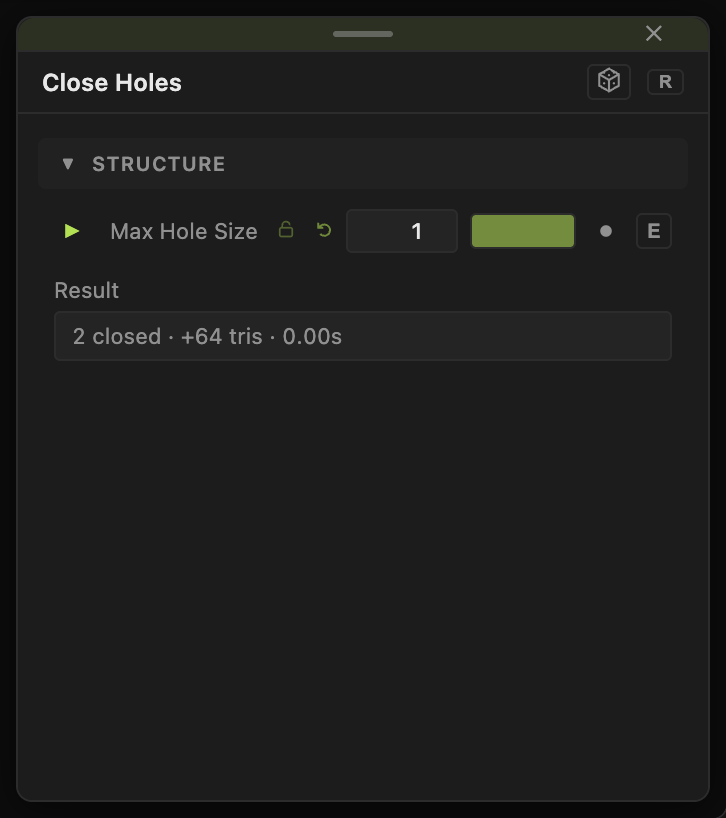
- Max Hole Size (0.01–1, default 1) — the largest boundary loop to fill, relative to the mesh size. 1 fills every hole.
- Result — a read-only line reporting how many holes were closed, including the case where the mesh was already closed.
Examples
Solid for a Boolean — a model with missing faces into Close Holes, then into a Boolean as the operand so it counts as a solid.
Keep the big opening — set Max Hole Size to 0.3 to cap small gaps and leave a large mouth open.
Troubleshooting
Result says 0 holes closed — the boundaries are larger than Max Hole Size, or the mesh was already closed.
The Boolean node closes holes on its own — it has its own Close Holes toggle, on by default. This node is for meshes that go anywhere else.