Fret/Meander
Greek-key meander pattern with configurable line width and turbulence for organic variation.
The Fret/Meander node draws the Greek key (meander) — the interlocking right-angled scroll from classical borders. A turbulence control can break the strict grid into a looser, hand-drawn variation.
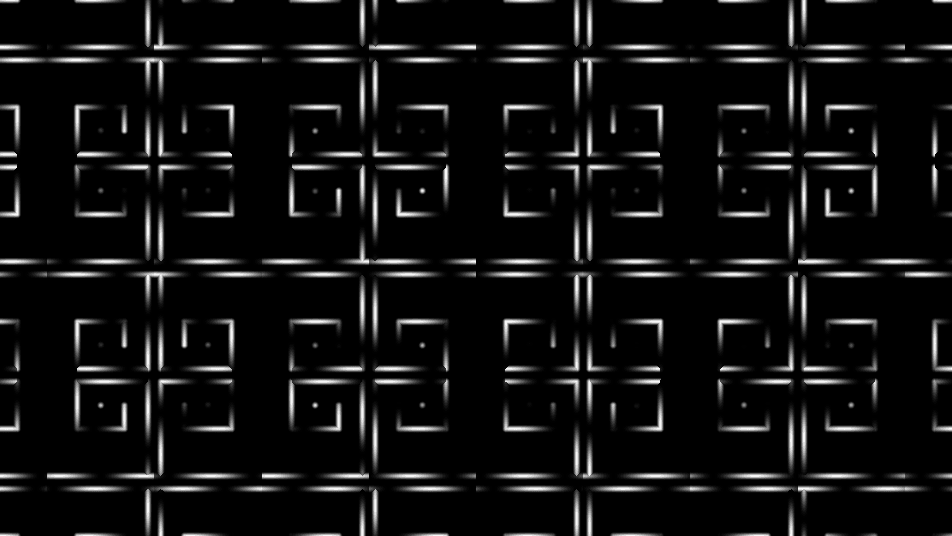
- One texture output; two optional texture inputs (domain warp and composite)
- Line Width and Turbulence shape the pattern
- Found in the node graph under Generators as Fret/Meander
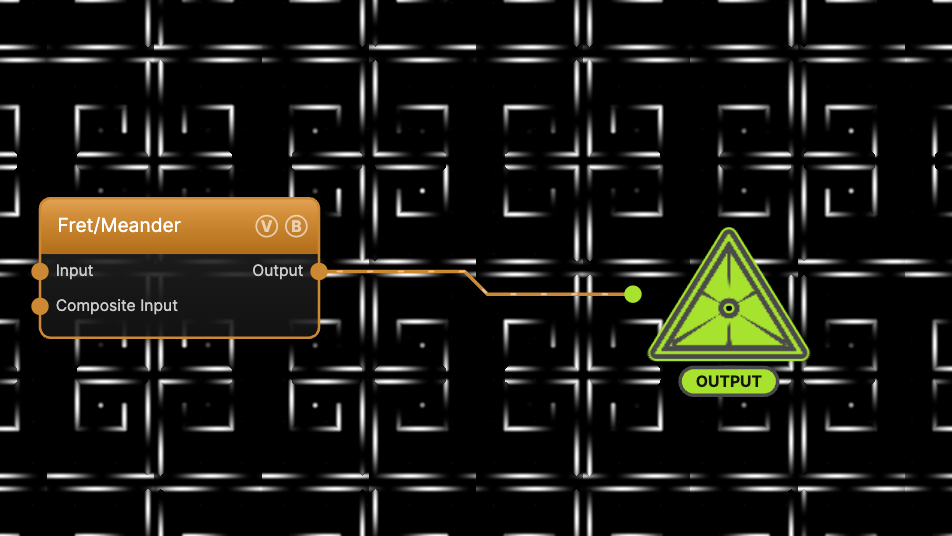
The image on the right is the example patch itself — drag and drop it onto the app (or load it with File → Load) to open the full graph.
Inputs and outputs
| Port | Type | Purpose |
|---|---|---|
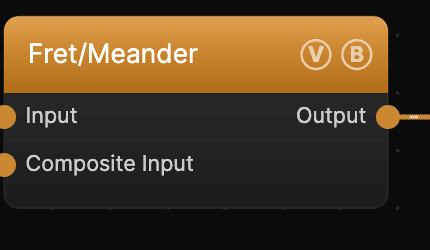
| Displace | Texture | Domain warp: the red and green channels push the sample coordinates by Displace Amount |
| Composite Input | Texture | Composited under the output with Composite Mode and Composite Mix, which appear once the port is wired |
| Output | Texture | The grayscale meander on black |
A black (or disconnected) Input produces no warp; the warp strength scales with Scale.
Parameters
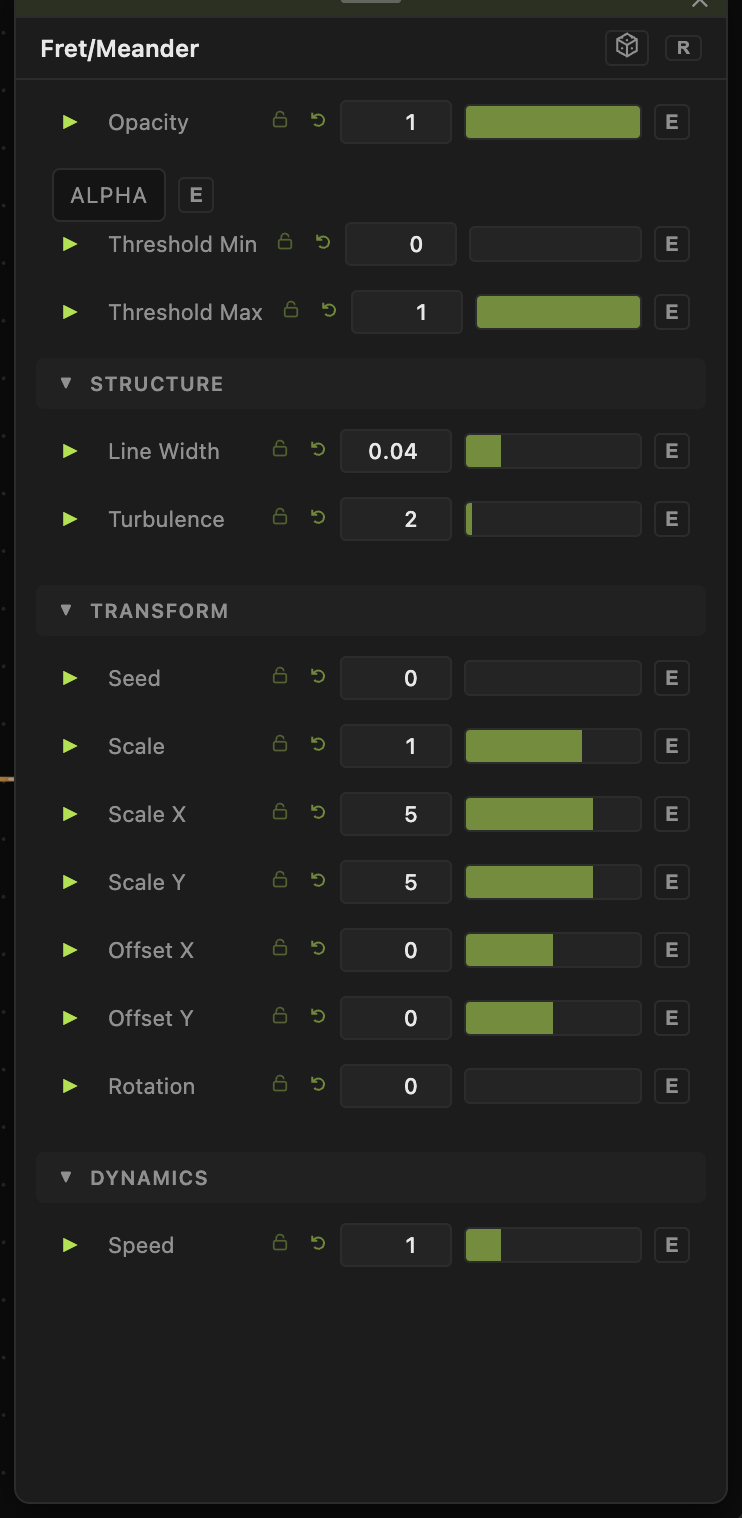
Opacity, Blend Mode, ALPHA, Invert Alpha, Threshold Min / Threshold Max — the standard operator header; see Perlin Noise for details.
Structure
- Line Width (0–1, default 0.04) — thickness of the meander stroke. Higher values fatten the key toward solid.
- Turbulence (1–32, default 2) — how much the path deviates from the strict grid. Low values keep the classic clean key; higher values warp it into an irregular, organic scroll.
Transform
- Seed (0–99999) and the shared Scale / Offset / Rotation block. Scale sets how many key repeats fill the frame.
Dynamics
- Speed (0–5, default 1) — drift rate of the pattern's animation, compounding with the global animation speed. 0 freezes it.
Every slider has a per-parameter animation bar, so any of these can be animated, audio-driven, or MIDI-mapped — see Parameters and Controls.
Troubleshooting
Key looks messy — lower Turbulence toward 1 for the clean classical meander.
Lines merge — lower Line Width.